The 10-minute e-bike conversation every middle school family should have before summer.
A short, practical script — no lectures, no fear tactics — for parents whose kids are about to ride faster than they can run.
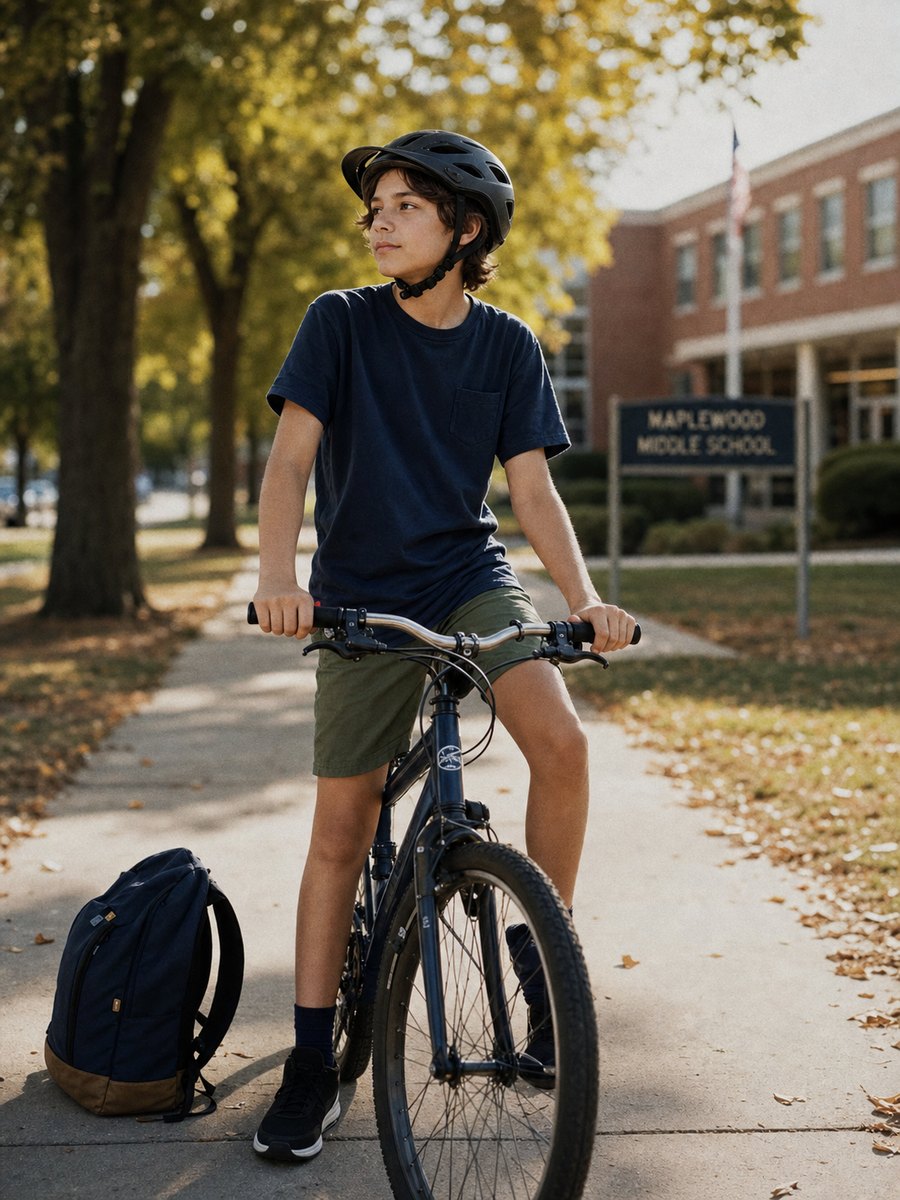
Here’s the truth most of us are sitting with. A class-2 e-bike can carry your sixth-grader twenty miles per hour down a road they used to scooter on. That isn’t a moral panic. That’s a math problem. And the way through it isn’t a longer lecture — it’s a shorter, better conversation.
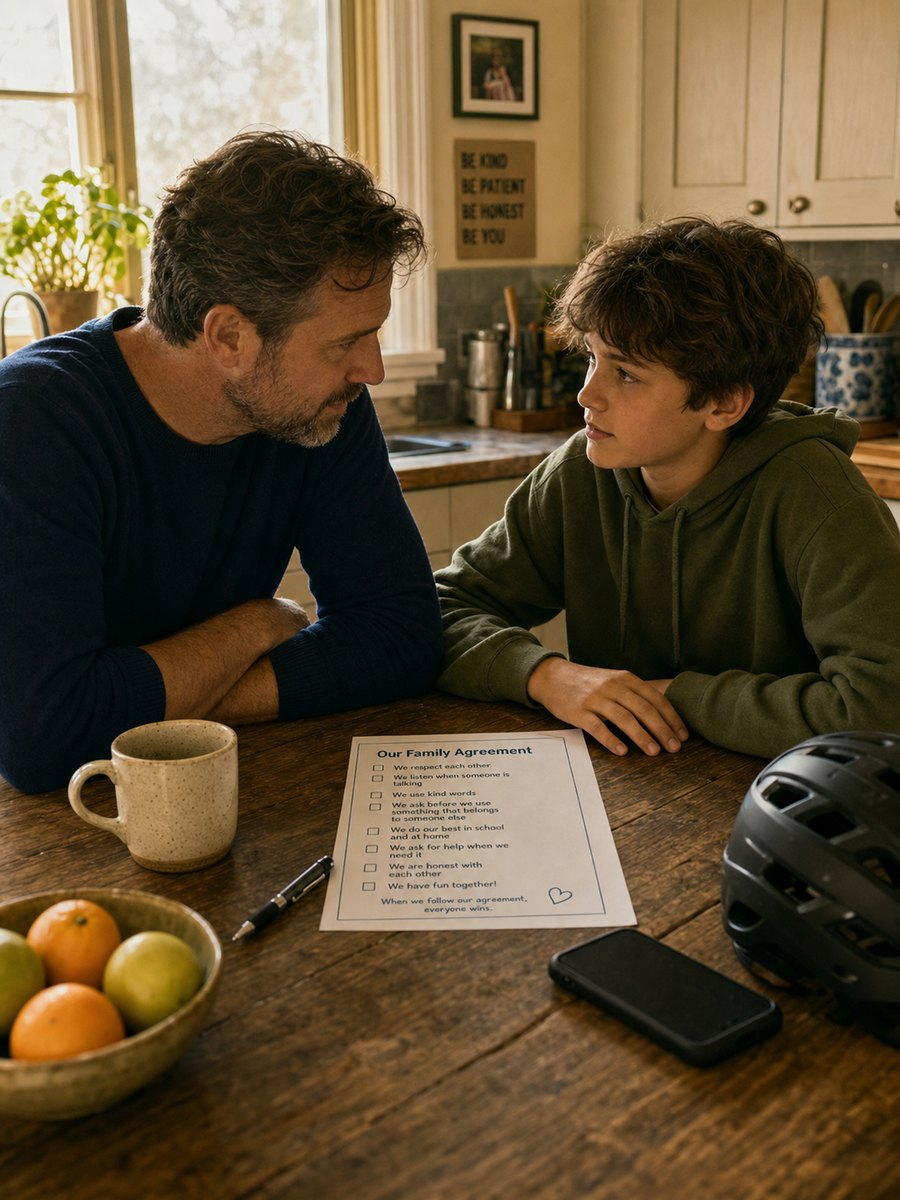
Here’s a 10-minute script you can run at the kitchen table tonight. It’s built on wheelWISE, our middle-school micro-mobility safety program, and it works because it asks your kid to think — not to nod.
Before you start: set the tone.
Open with what you’re not doing. “I’m not taking the bike. I’m not making a list of rules. I want ten minutes to figure out, together, how this goes well.” That sentence costs you nothing and buys you everything.
Minute 1–3 · Watch.
Pull up a satellite view of the three places they ride most. Driveway, school, friend’s house. Ask:
- “Where do cars come from that you can’t see?”
- “Where are pedestrians most surprised by you?”
- “Where does your speed feel like the most?”
You’re not quizzing. You’re building the muscle of noticing.
Minute 4–6 · Investigate.
Now slow down a real scenario. “You’re heading home, your friend is behind you, and a car backs out of a driveway you didn’t see.” Walk through the IPDE process — Identify, Predict, Decide, Execute — out loud, together. The point isn’t to land on the “right” answer. The point is to show your kid that good riders think in time: what could happen, what would I do, what does this require of me right now?
“The best e-bike riders aren’t the fastest. They’re the ones who saw it coming three seconds earlier.” — wheelWISE facilitator script
Minute 7–8 · Share.
Ask: “Who else needs to be part of this — the friend you ride with, the neighbor whose driveway you cut across, your little sister on the back?” Decision-making isn’t solo. Naming the other people on the road is half of riding well.
Minute 9–10 · Empower.
End with one specific commitment from each of you. Theirs might be: “I’ll always come to a full stop at the end of our street.” Yours might be: “I’ll ride with you Saturday so I actually understand what you’re navigating.” Write both down. Put them on the fridge. Revisit in two weeks.
What to do when they push back.
They will. Especially if they’re twelve. Try: “I’m not asking you to agree with me. I’m asking you to think out loud with me for ten minutes. After that, you tell me what you think makes sense.” Most kids will meet that. The ones who don’t are usually telling you something else is going on — that’s information too.
If you want to go deeper.
wheelWISE is the grade 6–8 version of this conversation, built into a full classroom curriculum aligned to NGSS, SHAPE America, and CASEL. If your school is figuring out what to do about e-bikes in the parking lot, we can help.